
Act III — The Seed
Level I: The Soul Unmasked (Identity)

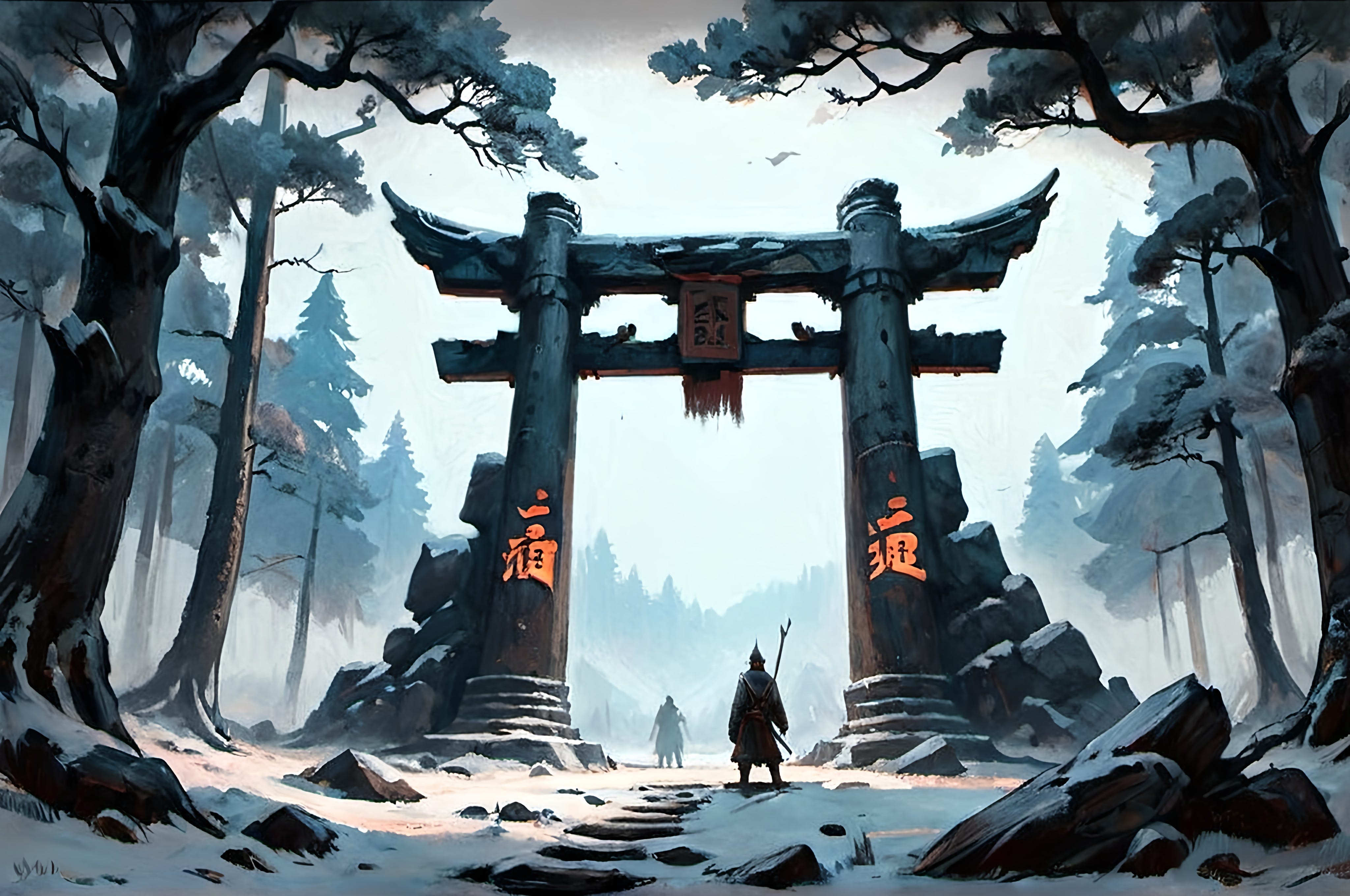
“A man with outward courage dares to die; a man with inner courage dares to live.” — Lao Tze
In my journey, I’ve realized the hardest terrain is not outside—it’s inside. The betrayals, losses, and storms we endure are often easier to face than what waits within. Inside, there are thresholds that test your presence, your clarity, and your capacity to live fully.
At Soul Level I (The Seed), the work begins with facing yourself honestly. It’s about understanding the architecture of your own being, the invisible structures that shape every decision, every habit, every hesitation.
This level asks a fundamental question: Who am I beneath the surface? Until I confront the layers of fear, attachment, and illusion that obscure my essence, nothing else can rise in strength.
Everything—my capacity to love, endure, balance, and ultimately align with life itself—depends on mastering this first level. The inner terrain is rough and deceptive, filled with hidden triggers, subtle compromises, and patterns that keep you small.
I’ve walked this road and watched how easily I could become lost. My fears and compulsions whispered, “Wait. Not yet. Protect yourself.” And if I had listened, I would have stayed there indefinitely.
Recognizing that this is the first threshold is critical: it is the foundation. Without it, the higher levels crumble, no matter how much is built atop.
The Shadow That Delays
The first obstacle at this level is subtle but lethal: the shadow of hesitation, fear, and self-doubt. It’s not dramatic; it doesn’t roar. Instead, it works quietly, bending perception, eroding confidence, and slowing momentum.
I’ve noticed it in the little choices: delaying a conversation, shrinking from a challenge, choosing comfort over truth. Over years, these micro-decisions accumulate, shaping a life of quiet compromise.
This shadow paralyzes not with logic, but with essence. It clouds vision, disconnects from instincts, and buries the compass of our soul under layers of old fear.
It’s an enemy that can masquerade as prudence, wisdom, or responsibility. Recognizing it requires honesty that cuts to the bone. Level I is where this shadow becomes visible. It is the moment you can finally say: This is not who I am.
Here lies the reason this is the first soul level: if you cannot see, name, and confront the patterns that delay you, everything else—connection, endurance, balance—rests on shaky ground. The shadow that delays is subtle, but without navigating it, nothing above it will hold.
The Neurotic Ego: The False Architect
The ego is the false architect of the first level. It builds structures that seem solid but cannot support the weight of life. Its pillars are fear and anxiety. Its sails are stitched from control, perfectionism, and external validation. Its anchor is a compulsion to be seen in a way that feels “acceptable.”
I clung to this ego because it saved me once. As a child, it protected me when storms were real and survival depended on vigilance. I could not have endured without it. But as an adult, the same structure became a prison. It promises security, yet enforces stagnation. It shields me from risk, yet starves me of growth.
At Soul Level I, the work is dismantling the ego’s illusions—learning to distinguish between protective habits from the past and limiting patterns in the present.
If you cannot unravel these threads, every other layer of the soul will be built on sand. This is why Level I is foundational. Without it, endurance falters, balance wavers, and alignment remains out of reach.
The Echo of the Past
Alongside the ego exists the echo of unprocessed wounds—the pain-body, as Eckhart Tolle calls it. It does not merely recall suffering; it demands repetition. Every time I spiral into shame, anger, or disproportionate reaction, I am not experiencing the present—I am feeding the past.
This echo of the past is insidious. It pretends to be truth, disguising old fears as current realities. Level I requires that we see it clearly: noticing the difference between what is alive in the present and what belongs to memory. Only by disentangling from this past can you begin to move freely, to act from clarity rather than reaction, to make decisions from presence rather than compulsion.
The ego and the echo of the past form a covenant: one anchors to memory, the other enslaves the present. Together, they create inertia, keeping us small and tethered to safety.
This level asks us to observe, disentangle, and reclaim capacity to act with integrity. Without this, nothing higher is possible.
What Happens If You Remain Here
Many people linger in this level their entire lives. At first, the inertia seems harmless: hesitation, delay, small compromises. But over time, life erodes. Dreams shrink to fit fear. Days revolve around avoidance. Potential voices are silenced before they can even speak.
I’ve seen it in myself. Knowledge polished but never applied. Ambition refined but never acted upon. The world does not strike you down—it simply ignores the parts of you that remain absent.
Level I is merciless because the cost of stagnation is your own life slipping by unnoticed.
Crossing the Threshold
Progress at this level is subtle, cumulative, and deliberate. I cannot rip fear or the echo of the past away with force. I cannot defeat them in dramatic confrontation. Instead, I grow past them, consistently, moment by moment. Presence, honesty, and deliberate action allow the ego and old wounds to wither.
Crossing this threshold does not feel like a battle. It feels like stepping into daylight after years in shadow. The first stones of the soul’s foundation are laid. This is why it comes first: without it, all subsequent work—connection, endurance, balance, alignment—is fragile.
The Essential Skill: Assertiveness
The sharpest tool I use at this level is assertiveness—not aggression, not manipulation, but the courage to act and speak from essence.
To say: “This is who I am. This is what I need. I will stand in it—and the world is free to accept or reject me.”
Every time I speak honestly without attachment to outcome, every time I accept rejection without self-abandonment, I lay another stone in the foundation of my soul. Assertiveness cuts through hesitation like a sword of clarity. It teaches to stop negotiating life from fear and begin designing from truth.
Observation: The Light That Dissolves the Shadows
Logic alone cannot dismantle the ego or erase the old wounds that lie buried in the bones of your being. You can reason, argue, or lecture yourself all you want—but the structures built from fear, habit, and unprocessed pain are impervious to intellect.
I know this because I’ve tried. I’ve spent nights convincing myself that understanding was enough, only to wake up trapped in the same compulsions, the same spirals, the same hesitation.
What does work is awareness. Not cleverness, not analysis, not grand gestures—but the simple act of noticing. When we witness fear, shame, or compulsive thought without immediately reacting, without judging myself, without trying to fix it or escape it, something shifts.
Eckhart Tolle calls this the power of the witness: the moment you observe the ego without fusing with it. In that pause, something ancient shifts. You are no longer the actor, enslaved to scripts written by fear; you are the watcher, the quiet presence behind the storm.
That moment of witnessing is small, but it is powerful. It is the first crack in the prison wall. Every time we pause and observe, we separate ourselves from the reflex, from the old pattern; we become the conscious presence that the shadows cannot control.
Every act of witnessing is an act of liberation.
The ego cannot survive when observed, because its power lies in unconsciousness. The moment light touches it, the illusion begins to dissolve. Not through force, but through presence.
Over months and years, this quiet practice compounds. Each act of observation strengthens a new neural pathway: the pathway of the witness. We begin to realize that we are not our reactions. We are not the echoes of old shame or anxiety. We are the presence that can hold them without being defined by them.
In these small, repeated acts, liberation accumulates—not suddenly, not in a dramatic eruption, but silently, relentlessly, like water wearing down stone.
The power of observation is both immediate and generational. I notice in the moments when I stop reacting automatically how much of my energy was once stolen by unexamined fear.
I reclaim it. My decisions gain clarity. My interactions gain depth. I begin to inhabit my own body and mind instead of wandering in the ghosts of old wounds.
Observation also teaches patience. It shows that healing and mastery are not instantaneous, that the shadows do not disappear overnight. Yet they can be rendered irrelevant—not by force, but by steady, relentless attention.
I see patterns, recognize triggers, and slowly, almost imperceptibly, my automatic reactions dissolve. What once dominated my choices becomes background noise. This is how the fortress of the soul is built—not by eradicating the shadows, but by refusing to be owned by them.
The Daily Practice: Building the Fortress of Self
Level I is practice, repetition, and patience. A fortress is not built overnight. Each day, I lay stone by stone:
Assertion: Speak plainly. Act deliberately. Ask without apology.
Witnessing: Observe yourself. Notice fear, shame, pride—do not collapse.
Detachment: Recognize that your worth is not hostage to approval.
Confront reality: Face things as they are.
Boldness: Step deliberately into fear. Move where discomfort resides.
Each act is repetition. Each repetition a stone. Stone by stone, the fortress rises—not to hide in, but to become.
My Voyage Beyond Level I
I have lived in a ship built from fear. Armor for sails, perfectionism as compass, control as mast. It almost sank me. The boy inside patched holes, polished surfaces, rehearsed voyages he never took.
The turning point was quiet: the choice to stop performing, to speak truth, to let outcomes fall where they may. Gradually, something shifted. Shadows whisper, echoes stir—but now I see them for what they are. I do not collapse. I do not flee. I watch. I choose. I sail.
I began to notice subtle transformations: the anxiety that once guided every decision no longer dominated me. I started to feel presence in my interactions, a steadiness in moments that once triggered panic.
My choices became deliberate rather than reactive. Level I is not about feeling invincible—it is about reclaiming agency over yourself.
Becoming the Fortress
Level I is the foundation. Every time we face fear, let go of control, or observe the past without collapse, another stone is laid. This work accumulates into a personal power that is quiet but unshakable. Not to avoid life—but to embody it.
No one is coming to save you.
Not a parent, not a partner, not even fate itself. If you wait, the ego will quietly enslave you to a life that does not belong to you. The stones of your fortress can only be placed by your own hands. Delay is decay. Action is liberation.
At the end of the day, the person who will either free you or trap you is staring back from the mirror. Radical accountability is the cornerstone of this work: no blaming, no deflection, no outsourcing responsibility. Every hesitation, every compromise, every surrender is yours to claim.
To dissolve the ego is not a task with a deadline—it is a lifetime’s work. Some days the shadow will seem to vanish, other days it will roar as if it has grown stronger. The point is not to eradicate it fully, for that may never happen. The point is to refuse to be enslaved by it, to hold the mirror steadily and act with integrity even when fear, pride, and old patterns rise up.
This is why it comes first: without grounding in self-honesty and observation, the higher levels—connection, endurance, balance, alignment—cannot be sustained. Yet it is not required that the ego be fully dissolved before moving onward. The path is not perfection, but momentum. Even partial awareness, even the first cracks in the old patterns, give enough strength to continue.
Each glimpse of presence, each act of witnessing, is a stone laid. As the fortress rises, it need not be complete to stand; it only needs foundations firm enough to carry the trials ahead.
Here, the groundwork is laid for living in step with life itself, even when storms rage. In the quiet discipline of observation, the soul remembers its strength. The watcher awakens, the shadows loosen their grip, and the fortress of self begins to rise—not as a finished citadel, but as a living structure, strong enough to walk forward and endure what comes.